Adding an elevator to a private residence is no longer limited to large luxury properties. Multi-storey homes, independent houses, duplexes, and premium residential developments increasingly use elevators to improve accessibility and make everyday movement between floors easier. Choosing the right Residential Elevator Manufacturer in Bangalore is therefore an important decision that should consider the building, users, available space, safety requirements, and long-term maintenance.
Bengaluru homes vary considerably in their layouts. Some properties are designed with a dedicated lift shaft from the beginning, while others require an elevator to be incorporated into an existing structure. The appropriate solution depends on these site-specific conditions rather than simply choosing a standard model.
Start With the Needs of the Household
Before comparing elevator specifications, consider who will use the lift.
A residential elevator may be useful for:
- Senior family members who find stairs difficult
- People with temporary or permanent mobility limitations
- Families living across three or more floors
- Moving groceries, luggage, and household items
- Improving accessibility in a future-ready home
- Creating convenient access to terraces or basement levels
Thinking about actual usage helps determine suitable capacity, cabin dimensions, door configuration, and operating system.
Evaluate the Available Space
Space planning is particularly important in residential projects.
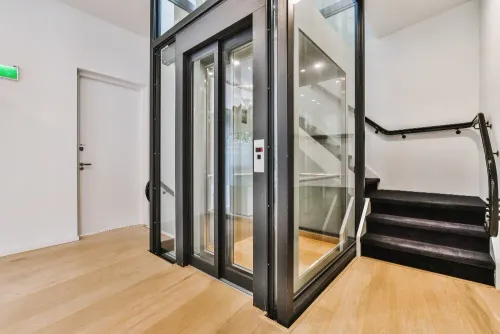
New homes can incorporate the elevator into the architectural plan, allowing the architect and elevator manufacturer to coordinate shaft dimensions, floor openings, electrical provisions, and structural requirements.
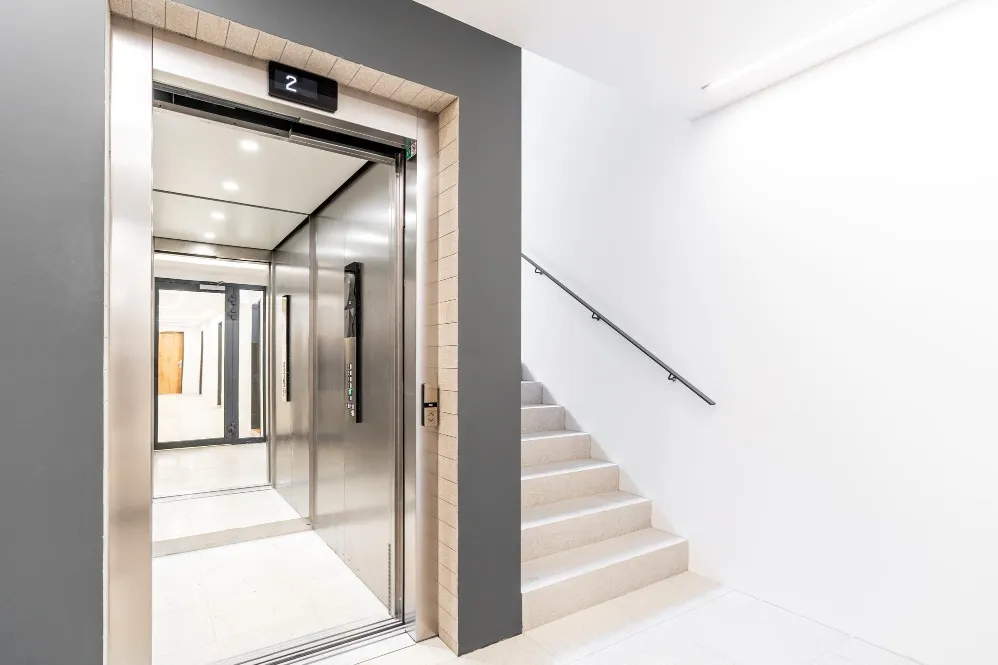
Existing homes require a different approach. The manufacturer may need to evaluate possible locations such as the staircase area, lobby, courtyard, external wall, or another suitable part of the property.
A professional site assessment helps establish whether the proposed location is technically practical before major civil work begins.
Understand Different Elevator Technologies
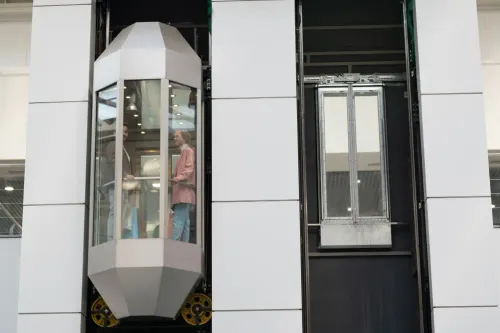
Residential elevators can use different drive technologies depending on travel height, available space, expected usage, and design requirements.
Hydraulic systems are commonly considered where smooth operation and particular structural configurations are important. Other residential elevator configurations may use traction or machine-room-less systems.
Instead of choosing technology based solely on popularity, homeowners should ask why a particular system suits their building.
Useful questions include:
- How much space does the system require?
- What electrical provisions are needed?
- Is a machine room necessary?
- What are the maintenance requirements?
- How does the system respond during a power interruption?
- What provisions are included for emergency situations?
Clear answers make different options easier to compare.
Look Beyond Cabin Appearance
Finishes matter, especially when the elevator forms part of a carefully designed home. However, visual appearance should come after engineering and safety considerations.
Cabin choices can include different flooring, lighting, panels, doors, control fixtures, and decorative finishes. Architects and interior designers can coordinate these elements with the overall residential design.
The important point is to achieve a balance between appearance, usability, durability, and maintainability.
Consider Long-Term Service Requirements
An elevator becomes a permanent mechanical and electrical system within the property. Maintenance therefore deserves attention during the buying process rather than after installation.
Ask potential manufacturers about preventive maintenance schedules, service support in Bengaluru, availability of compatible components, response procedures, and documentation provided after installation.
Working with a locally accessible manufacturer can simplify coordination during installation and subsequent servicing.
Orchid Elevators works with residential elevator requirements in Bengaluru, Karnataka, where building layouts can range from compact urban homes to spacious independent properties. A project-specific assessment allows homeowners, architects, and builders to understand what configuration is appropriate before finalizing specifications.
Plan the Elevator Early Whenever Possible
For a new house, involving the elevator manufacturer during architectural or structural planning can reduce later modifications. Shaft dimensions, floor levels, electrical requirements, door positions, and surrounding finishes can then be coordinated before construction progresses too far.
For an existing residence, early technical evaluation is equally useful because it identifies practical installation locations and potential structural considerations.
A well-selected residential elevator should fit naturally into the building and remain practical throughout years of use. Focusing on engineering suitability, accessibility, safety provisions, space planning, and maintenance support gives Bengaluru homeowners a much stronger basis for selecting the right solution.
Keywords