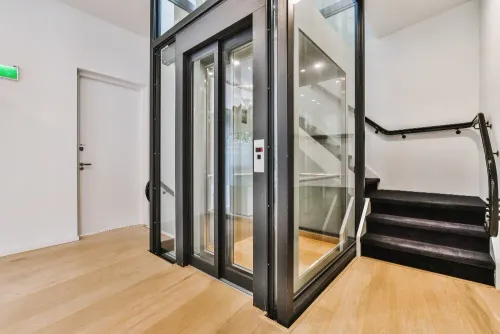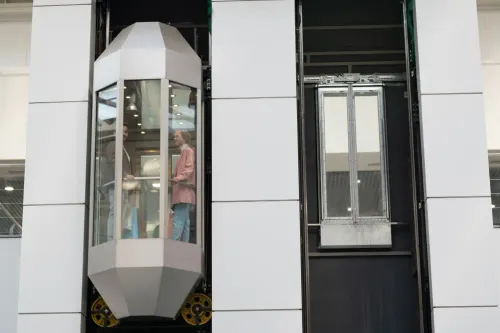
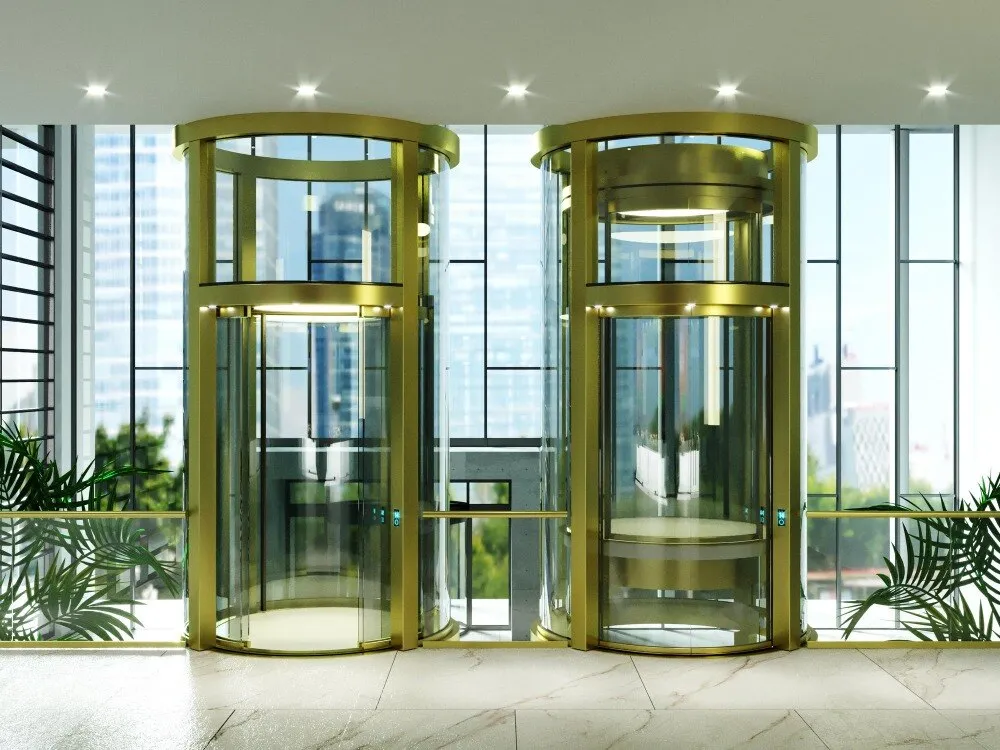
“Gold glass” describes an appearance, not a lift mechanism: the quotation must identify the glass construction, metal finish, drive system, and safety provisions separately. By comparing those choices against your villa’s structure, climate, traffic pattern, and maintenance capacity, you can specify a lift that looks luxurious without creating avoidable heat, privacy, corrosion, or service problems.
Key takeaways
- Define the glass tint, frame finish, panels, and lift mechanism in writing.
- Choose laminated or toughened glass based on safety, cleaning, and heat exposure.
- Check shaft space, power supply, structural loads, and emergency access before construction.
- Compare installation, maintenance, spare parts, warranty, and running costs—not just the quotation.
Define exactly what “gold glass” means before requesting a quotation
“Gold glass” describes an appearance package, not a lift mechanism. It may combine gold-tinted glass, gold-finish metal framing, reflective glass, or brushed-gold cabin panels; the lift itself could be traction, hydraulic, or a vertical platform lift. Ask for a written specification instead of accepting “toughened gold glass” as a complete description.
1. State the glass construction: laminated or tempered, total thickness, interlayer, tint or reflective coating, edge treatment, and the named impact or safety test standard. Laminated glass holds fragments after breakage; tempered glass offers impact resistance but normally cannot be cut or drilled later.
2. Identify every gold surface separately. Ask whether the colour comes from the glass, powder coating, anodising, plating, or another finish, and request the coating manufacturer, cleaning instructions, corrosion resistance, and replacement process.
3. Specify the enclosure scope: glazed cabin walls, shaft panels, landing doors, handrails, ceiling, and floor. A quote covering only the cabin can leave shaft glazing and landing finishes outside the price.
4. Require the quotation to name the lift type, rated load, car dimensions, door width, travel, speed, pit or pitless arrangement, headroom, power supply, safety devices, certification, warranty, and maintenance access.
Ask for daytime and nighttime lighting checks, including emergency lighting after power failure. Reflective or dark gold glass can hide the car interior, create landing glare, and make cleaning marks conspicuous. A drawing showing panel joints, frame sections, drainage, and glass replacement access will expose omissions before construction begins.
Choose glass and finishes that remain practical in Mysore
For most Mysore villas, choose laminated glass with a durable gold-finish metal frame rather than specifying “gold glass” alone. Laminated glass holds fragments on its interlayer after breakage; toughened glass resists impact but breaks into loose pieces and cannot normally be cut or drilled later.
Ask for the glass build-up, thickness, edge treatment, test standard, and replacement method.
| Option | Privacy and heat | Cleaning and durability |
|---|---|---|
| Clear laminated glass | Maximum light and visibility; highest privacy and solar-gain burden | Shows fingerprints and dust; easiest to inspect for damage |
| Tinted or reflective glass | Reflective glass reduces views into the car and can moderate glare, but may create dark reflections at landings | Needs daytime and nighttime lighting checks; water marks remain visible |
| Laminated glass with privacy film | Adjustable privacy without replacing the glass; film does not remove heat unless it has a stated solar-control rating | Protect film edges from moisture and abrasive cleaning; budget for eventual replacement |
| Opaque or partially glazed panels | Best privacy and lower cleaning load, with less direct solar gain | Gives up the open appearance but reduces fingerprints and glare |
For the frame and cabin trim, specify PVD-coated 316 stainless steel where the lift faces monsoon moisture, dust, or frequent cleaning. PVD gold finishes usually outlast decorative plating, but demand the coating warranty and cleaning instructions.
Avoid chloride bleach, metal polish, scouring pads, and harsh acidic cleaners; use a soft cloth, dilute neutral detergent, and dry the surfaces to prevent water marks. Provide drainage at the shaft base and test emergency lighting when reflective or dark glass reduces daylight.
Match the enclosure and lift mechanism to the villa
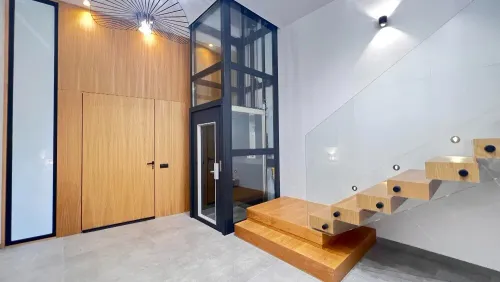
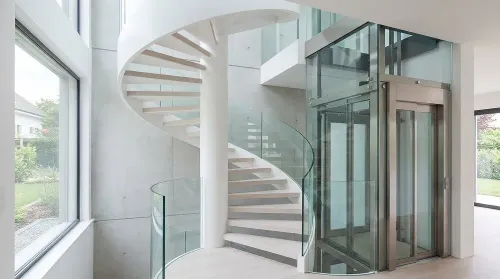
A fully glazed cabin with a glass shaft suits a villa where the lift is an architectural feature and privacy is not a concern. Choose partial glazing when you want daylight and a lighter appearance without exposing every passenger.
An opaque cabin is the safer visual choice for bedrooms, staff routes, strong sunlight, or occupants who value privacy over display.
| Option | Best fit | Main trade-off |
|---|---|---|
| Fully glazed cabin | Open stair halls, landscaped views, low-privacy circulation | More fingerprints, glare, heat and cleaning |
| Glass shaft | Feature locations beside stairs or entrance halls | Higher exposure to dust, moisture and solar gain |
| Partial glazing | Most family villas seeking balance | Less dramatic, but easier to shade and maintain |
| Opaque cabin | Private routes, bedrooms, direct-sun locations | Heavier visual presence and no outward view |
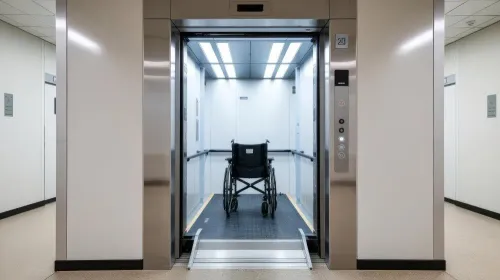
Base the enclosure on traffic, not the advertised capacity. A wheelchair, elderly user, or frequent service trolley needs usable car dimensions, door width and smooth stopping more than decorative glass. Confirm that the shaft, pit or pitless base, overhead clearance and maintenance access suit the selected enclosure.
For the mechanism, traction usually fits a villa with several floors, regular family use, tighter energy goals and a preference for consistent ride quality. A hydraulic lift can suit a low-rise villa with modest traffic where its installation layout and slower operation are acceptable, but the design must address oil equipment, drainage and maintenance access.
Request a hydraulic lift comparison against traction covering speed, standby power, noise, emergency lowering, service intervals and full safety certification. A “home elevator” label alone does not prove it meets the requirements of a conventional passenger lift.
Check the building, power, and safety requirements before construction
Verify the villa’s structure, power supply, and rescue access before approving the lift layout. A decorative glass enclosure does not eliminate the need for a properly engineered shaft, landing protection, or maintenance route.
1. Confirm the lift shaft dimensions on the architectural and structural drawings. Mark every landing door, guide-rail fixing, counterweight zone, pit depth, and overhead clearance. For an existing villa, take a site survey rather than relying on old plans.
2. Ask whether the design uses a pit, a pitless base, or a raised platform, and identify drainage or water-sealing work. Keep electrical conduits and plumbing out of the shaft. Provide a safe route to the controller and lift equipment for maintenance.
3. If selecting a machine-room-less lift, confirm where its controller, traction equipment, guide rails, and counterweight will fit. Have the structural engineer check rail and counterweight loads; glass and gold-finish panels cannot carry these forces.
4. Obtain the lift supplier’s written electrical schedule: voltage, phase, running current, starting current, earthing, voltage tolerance, and generator size. Do not assume a domestic inverter or generator can start the lift or lower it during a power cut.
5. Check that each landing door remains locked when the car is absent, cannot open outside the unlocking zone, and has protected door edges and interlocks. Specify emergency alarm, battery-backed rescue, and a manual recovery procedure before construction starts.
Compare suppliers on performance, service, and total ownership cost
Choose the supplier whose written quotation matches your villa’s traffic pattern, not the one with the most impressive gold-glass photograph. Compare lift capacity, cabin dimensions, door width, ride smoothness, travel speed, noise, and rated daily usage; a compact two-person lift is not equivalent to a wheelchair-friendly cabin used by a large family.
| Supplier area | What to compare | Warning sign |
|---|---|---|
| Performance | Lift capacity, cabin dimensions, door width, stopping accuracy, noise, duty cycle, safety devices, and backup power requirements | “Generator compatible” without starting current, running current, phase, earthing, voltage tolerance, or rescue-battery details |
| Service | Residential lift maintenance frequency, Mysore response time, warranty duration, included inspections, trapped-passenger call-out cost, and escalation contact | A low price with no written response time or after-sales scope |
| Ownership cost | Door-roller and seal replacement, hydraulic oil or battery replacement, safety testing, glass and metal cleaning, major-part availability, and labour charges | Consumables, travel, call-outs, and periodic testing excluded from the headline price |
Ask Orchid Elevators and competing suppliers to price the same specification, including installation, shaft or enclosure work, electrical connections, taxes, commissioning, and handover documents. Then request a five-year cost schedule rather than comparing only the initial figure.
Confirm who provides emergency rescue and who remains responsible if the villa’s inverter or generator cannot start the lift. A supplier that will not document these details is not offering a comparable quotation.
Related products
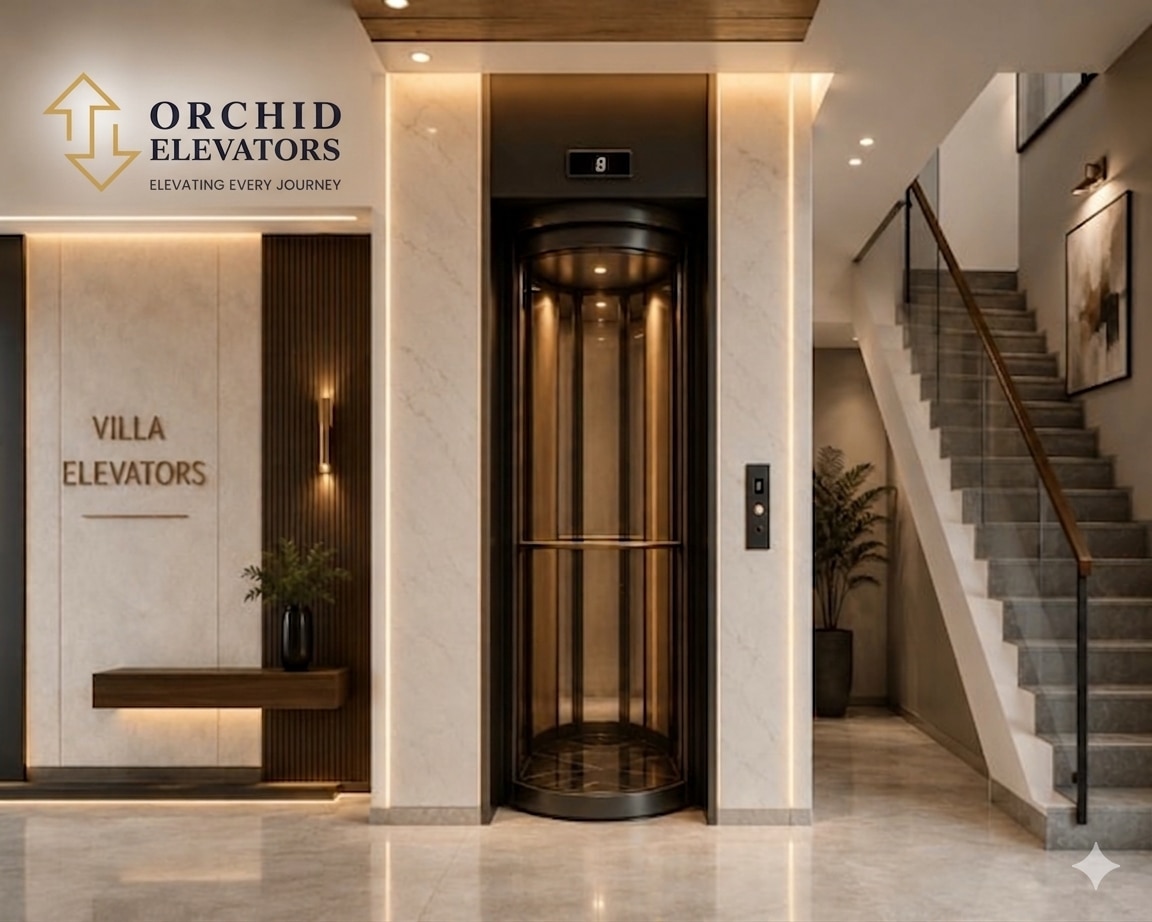 | Residential Elevator Orchid Elevators is a leading villa elevator manufacturer in Bangalore, offering premium elevator solutions designed to enhance luxury, convenience,... View product → |
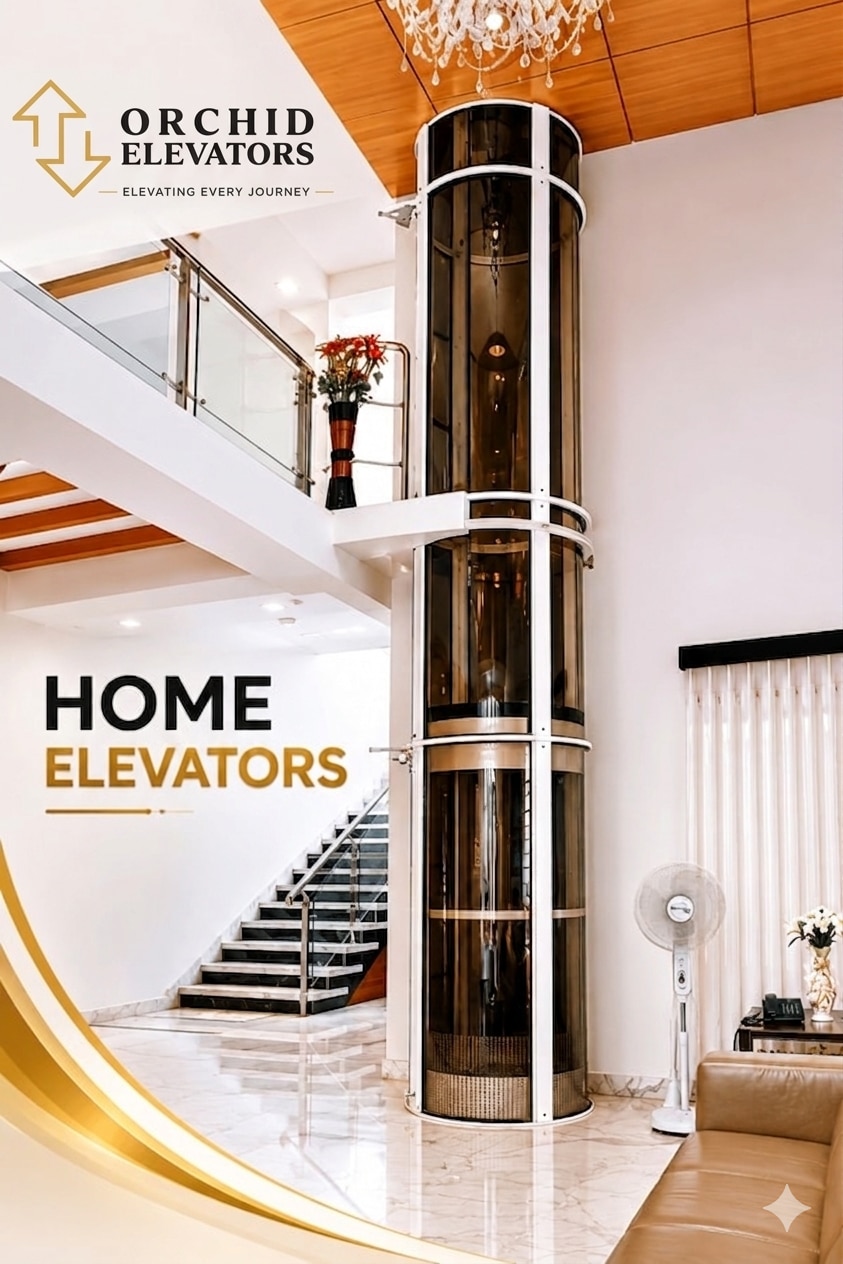 | Residential Elevator Orchid Elevators is a trusted home elevator manufacturer in Bangalore, delivering premium residential elevator solutions that combine accessibility,... View product → |
Frequently asked questions
What does “gold glass” mean in a home lift quotation?
It describes an appearance package rather than a mechanism. Request the glass tint, safety glass type, metal finish, cabin panels, and lift mechanism in writing.
Which glass and finishes are practical for a Mysore villa?
Compare the glass safety specification, solar and heat performance, cleaning needs, fingerprint visibility, corrosion resistance, and durability of the gold finish.
How should you match the lift enclosure and mechanism to a villa?
Choose the enclosure and mechanism after checking available shaft space, travel height, load, speed, interior design, noise expectations, and accessibility needs.
What should you check before constructing a gold glass home lift?
Confirm structural openings, pit or pitless requirements, headroom, floor loading, electrical supply, earthing, emergency lowering, landing access, and safety provisions.
How do you compare gold glass home lift suppliers?
Compare the complete specification, installation scope, warranty, preventive maintenance, response times, spare-parts support, energy use, and total ownership cost.
Related product
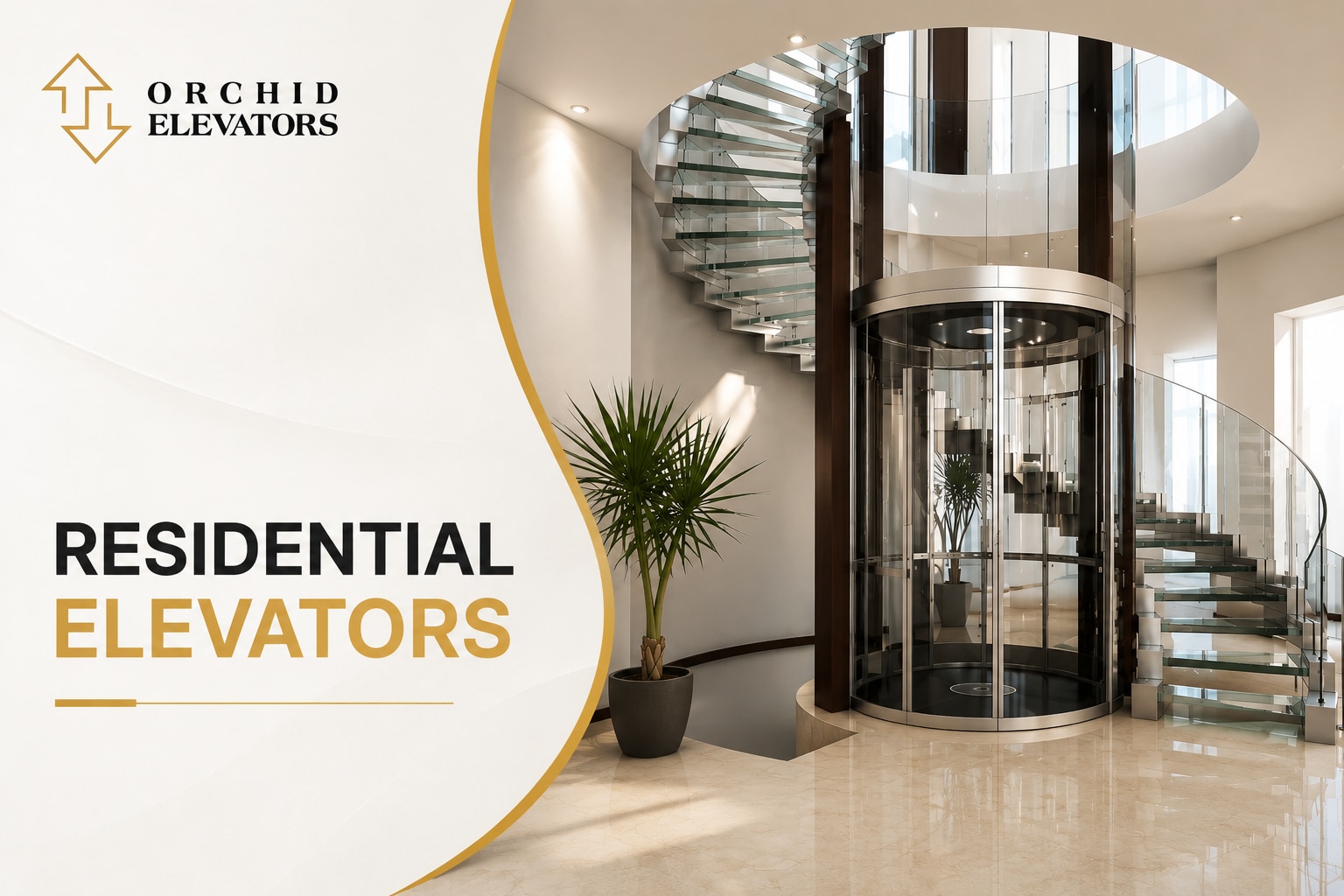 | Residential Elevator Orchid Elevators is a leading home elevator manufacturer in Bangalore, offering innovative elevator solutions that enhance accessibility,... View product → |