A gold glass lift can save a machine-room footprint, but it still needs a correctly sized shaft, pit, overhead, controller access and structural support. By the end, you will know which dimensions, glass specifications, safety checks and technology comparisons to demand before approving an installation in Hosur.
Key takeaways
- Treat “gold” as a finish, not a safety classification.
- Confirm whether glazing covers the car, doors, shaft, or decorative inserts.
- Compare MRL traction with hydraulic and machine-room lifts before choosing.
- Request load, speed, shaft, power, safety and emergency-access details in writing.
What “gold glass” means in a lift specification
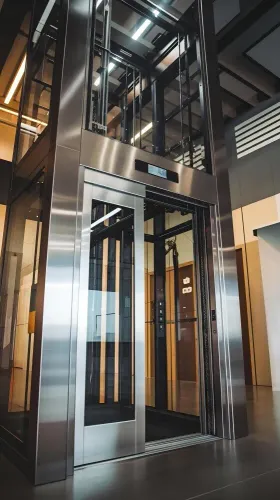
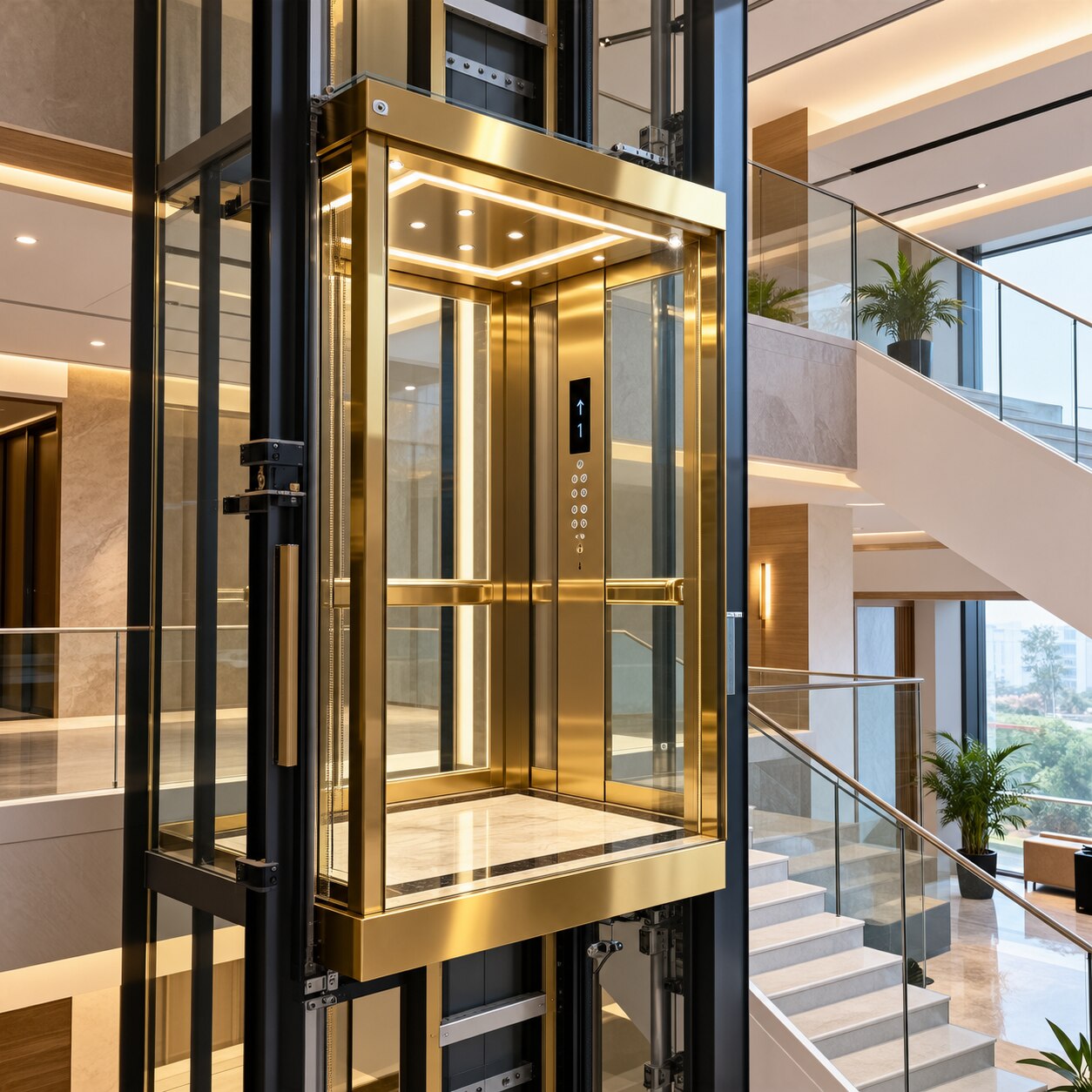
“Gold” describes appearance, not a lift-safety classification. A Gold Glass Lift might use clear glazing with a gold-coloured frame, gold-tinted glass, or a gold-toned coating or film. The label alone does not tell you the glass’s impact performance, fire performance, or whether the car doors, walls, shaft enclosure, or only decorative inserts are glazed.
Ask for these details in the specification:
- The glass build-up: laminated glass, toughened glass panels, or another approved construction
- The exact glazed surfaces and panel thickness
- The frame material and finish, including its cleaning method and warranty exclusions
- The required impact and fire performance for each panel location
Toughened glass breaks into small pieces, but it can lose its barrier function after breakage. Laminated glass holds fragments to its interlayer, so it is often the more suitable choice where the glass must remain a barrier; the correct build-up depends on whether it is a door, shaft wall, car panel, or guard.
Daily use also changes the buying decision. Abrasive cleaners, harsh chemicals, trapped moisture at frame joints, and trolley impacts can scratch, stain, or discolour a gold finish. Heavy laminated glass, stone, and metal can reduce passenger payload, so the supplier must recalculate the rated load from the complete car design rather than its visible size.
How an MRL lift fits into a Hosur building
An MRL lift removes the separate machine room, not the equipment or the space it needs. In a machine-room-less elevator, the traction machine sits within or beside the hoistway, while the controller and drive occupy a designated cabinet or hoistway area. Guide rails, counterweight, travelling cables and safety gear remain inside the shaft.
Confirm these project dimensions before approving the design:
| Dimension | What to confirm | Why it matters |
|---|---|---|
| Shaft dimensions | Clear internal width and depth | Determines whether the car, counterweight and guide rails fit |
| Pit depth | Finished floor to pit floor | Provides space for buffers and safe refuge |
| Overhead | Top landing to the highest obstruction | Allows car clearance and machine access |
| Door opening | Clear width and height | Controls wheelchair, furniture and stretcher access |
| Car size and load | Internal dimensions and rated kilograms | Matches occupancy and intended use |
| Travel and stops | Vertical travel and number of landings | Determines motor duty, rail length and controls |
| Structure and power | Support reactions, three-phase supply and earthing | Prevents structural damage and unreliable operation |
A quotation that says “space-saving” without listing shaft dimensions is incomplete. The drawing must also show fire separation, shaft walls, pit drainage, ventilation, access to the controller and safe maintenance clearances.
Do not approve a design until authorised technicians can isolate power, reach the controller and traction machine, move the car manually, and release trapped passengers without entering an unsafe shaft area. Hosur planning and lift approvals remain separate checks.
MRL traction versus hydraulic and machine-room traction lifts
For a low-rise premium home or villa, an MRL traction lift is usually the strongest choice when you want a space-saving elevator without sacrificing travel or speed. It removes the dedicated machine room, but it still needs a correctly sized shaft, pit, overhead clearance, structural support and safe maintenance access.
| Option | Space | Travel and speed | Maintenance |
|---|---|---|---|
| MRL traction lift | No separate machine room; the machine and controller sit in or beside the hoistway | Suits several stops, taller travel and higher speeds than most residential hydraulic systems | Requires rope, sheave, brake and control-system inspections; access must be designed, not assumed |
| Hydraulic lift | No counterweight, but the pump unit needs a cabinet or room and the pit arrangement can be substantial | Practical for low travel and fewer stops; slower acceleration and travel are common | Requires checks for oil leaks, hose condition, seals, pump performance and fluid quality |
| Conventional machine-room traction lift | Largest building footprint because the machine room sits above or beside the shaft | Strong option for higher travel, speed and heavier traffic | Equipment is accessible in the machine room, which can simplify servicing, but the room adds construction and fire-separation work |
Choose a hydraulic lift when travel is short and speed is secondary. Choose conventional machine-room traction when traffic, heavy duty cycles or service access outweigh floor area.
Before approving an MRL proposal, compare actual car dimensions, door width, stop count, travel height, pit depth, overhead and power supply. “Space-saving” alone proves nothing; a cramped controller location can turn routine maintenance into a safety problem.
Glass safety, approvals and emergency access
Do not treat “gold glass” as a safety classification. The specification must identify each panel as laminated or monolithic toughened glass, with its thickness, interlayer, framing and location. Laminated glass holds broken fragments together; monolithic toughened glass breaks into small pieces but can lose its barrier function after impact.
| Glass type | Breakage behaviour | What to verify |
|---|---|---|
| Laminated | Interlayer retains fragments | Build-up, impact rating and suitability for the car, shaft or door |
| Monolithic toughened | Granulates after failure | Retained barrier, edge protection and replacement plan |
| Tinted or coated | Changes colour or heat/light transmission | Confirm it is additional to, not a substitute for, safety glass |
The rated load must be recalculated after adding heavy glass, stone or decorative metal. A visually large car is not proof that it can carry the stated number of passengers.
Before use, ask for these specific checks:
- A design and installation record referencing IS 14665, with the declared rated load, car area, door opening and suspension details.
- Tested door interlocks, overspeed governor, safety gear, buffers, emergency alarm, two-way communication and automatic rescue or battery-lowering arrangements.
- A Karnataka Electrical Inspectorate inspection or approval record, plus the lift licence or registration required for the installation location.
- Building permission and fire-authority confirmation where applicable. A passenger glass lift is not automatically a fire lift or evacuation route.
- A documented rescue procedure showing landing access, machine/controller access and safe manual release of trapped passengers.
Fire-rated doors, protected lobbies, emergency power and fire-service operation require separate design approval; ordinary passenger lifts must not be relied on during a building fire.
The installation brief to request from a Hosur lift supplier
Put the building’s measured constraints in the quotation request, not just “premium gold glass MRL lift.” State the number of stops, travel height, shaft width and depth, pit depth, overhead clearance, structural support, available power supply and expected passenger traffic.
Require the supplier to itemise these deliverables:
- Rated load, usable car area, car height, door opening and door type; recheck payload after adding laminated glass, stone, metal or other decorative finishes.
- Traction machine, controller, guide rails and counterweight locations, with a drawing showing lift maintenance access without entering unsafe or inaccessible areas.
- Backup power capacity, changeover arrangement and what happens during a power failure, including passenger release and alarm operation.
- Ventilation, lighting and heat control for a glazed shaft or sun-exposed car; do not assume these are included in the lift price.
- Safety equipment, fire-service operation, shaft and landing-door construction, and the inspection, licence, electrical-safety and building approvals required in Hosur.
Give Orchid Elevators the same measured brief as competing suppliers so omissions do not create a misleadingly low quote. The maintenance brief should name preventive-service frequency, response time, emergency contact, included consumables, spare-parts availability, glass and finish cleaning limits, warranty exclusions and the procedure for recording breakdowns.
For a hospital, add bed or stretcher dimensions, smooth levelling, handrails, trolley protection, infection-control cleaning and emergency-power requirements as separate acceptance criteria.
Related products
 | Residential Elevator Orchid Elevators is a trusted home elevator manufacturer in Bangalore, delivering premium residential elevator solutions that combine accessibility,... View product → |
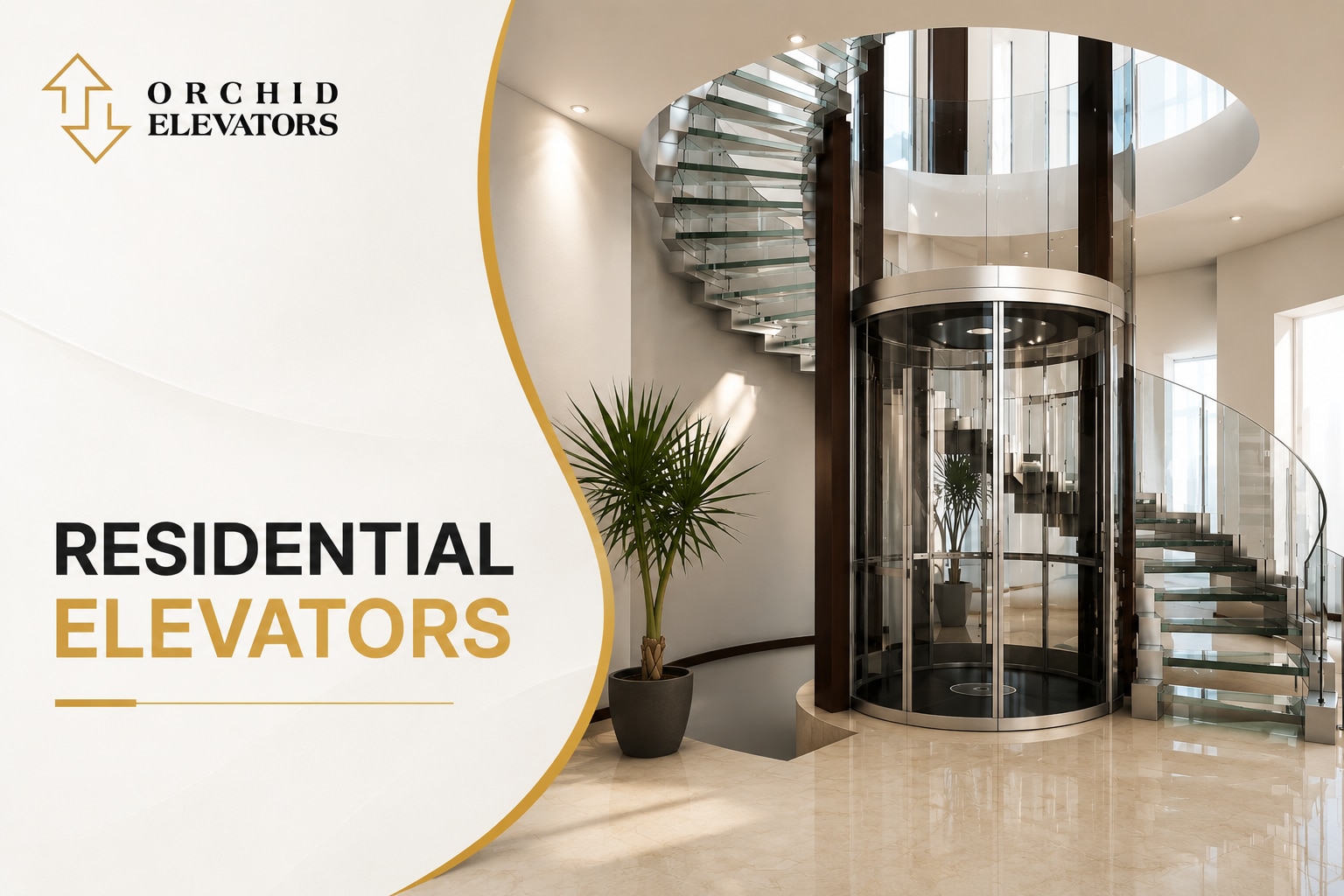 | Residential Elevator Orchid Elevators is a leading home elevator manufacturer in Bangalore, offering innovative elevator solutions that enhance accessibility,... View product → |
Frequently asked questions
What does “gold glass” mean in a lift specification?
It describes the appearance of the lift, not its safety classification. It can refer to gold-coloured frames, tinted glass, or gold-toned coatings or films.
How does an MRL lift fit into a Hosur building?
An MRL lift places the traction machine inside the shaft, removing the separate machine room. Your supplier must check shaft dimensions, overhead clearance, pit depth, structural support, access and power requirements.
How does MRL traction compare with hydraulic and machine-room traction lifts?
MRL traction saves machine-room space and suits many low- and mid-rise buildings. Hydraulic lifts use a cylinder and need space for hydraulic equipment, while machine-room traction lifts place machinery in a dedicated room for easier access.
What glass safety and approval information should you check?
Ask for the glass specification, impact-performance evidence, fire-performance details where relevant, door and shaft enclosure details, approval documents, emergency-access arrangements and the supplier’s Form 20B licence copy.
What should you request from a Hosur lift supplier?
Request a written installation brief covering rated load, speed, travel, shaft size, pit, overhead, power supply, finishes, glass locations, safety systems, approvals, maintenance access and emergency rescue procedures.
Related product
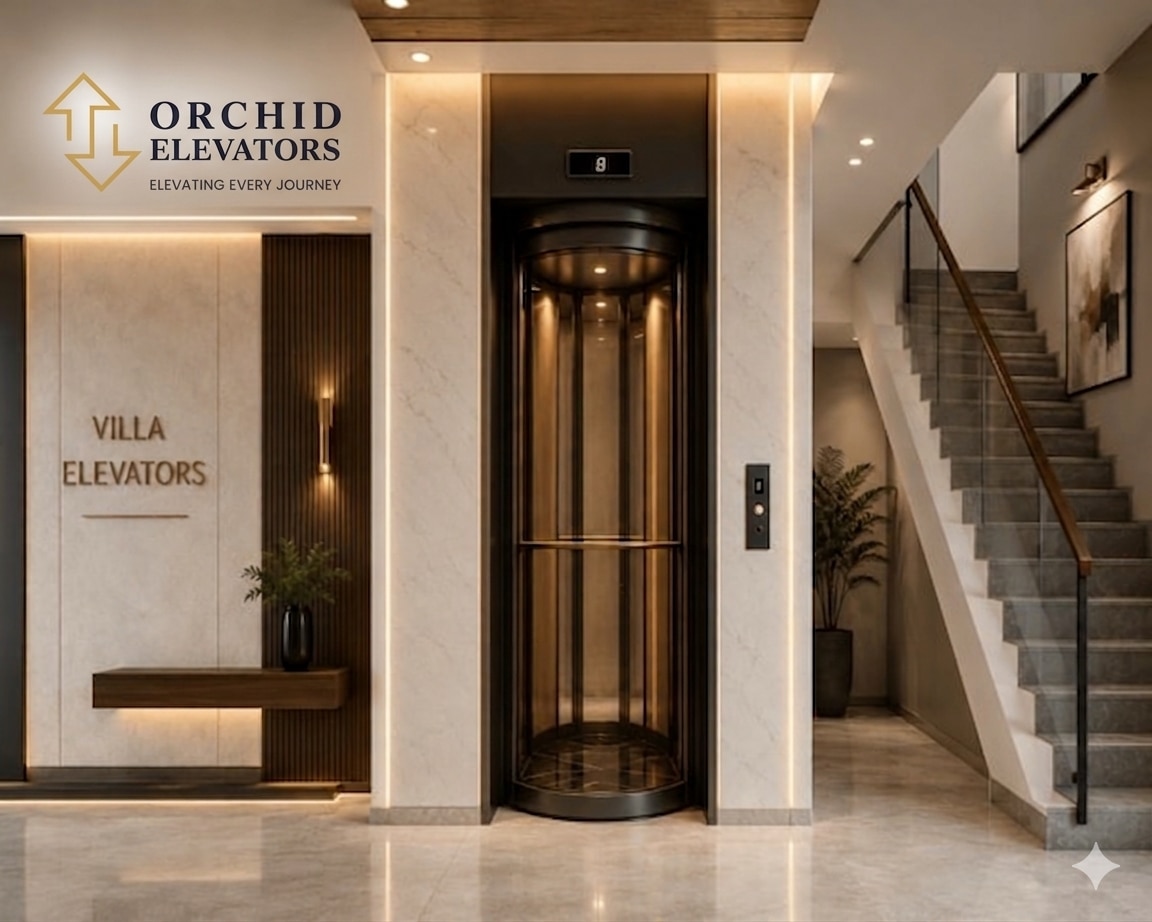 | Residential Elevator Orchid Elevators is a leading villa elevator manufacturer in Bangalore, offering premium elevator solutions designed to enhance luxury, convenience,... View product → |